
EMO Glove
A wearable controller that transforms subtle gestures into emotional interaction
Interaction Highlights
INTRODUCTION
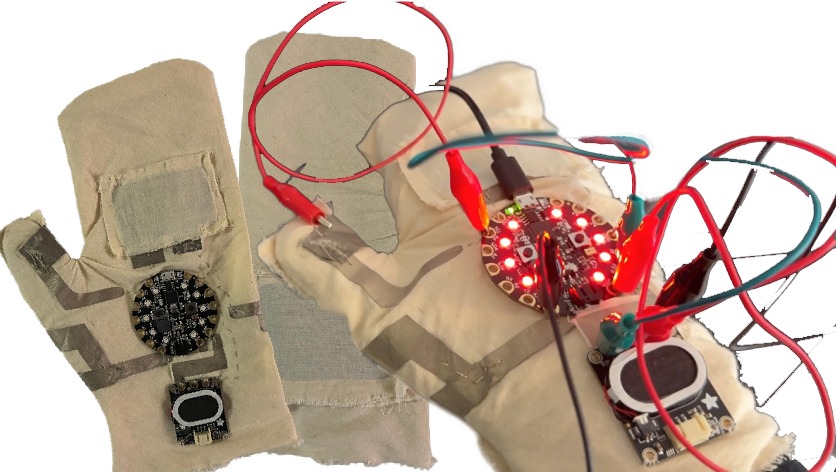
EMO Glove is a wearable controller built using the Circuit Playground Express that helps introverted players express connection through hand movement. It uses pressure sensing and tilt detection to translate gestures such as a shoulder pat for support, a fist bump for brotherhood, or a thumbs up for encouragement into warm and playful interactions.
You’ll see multiple gesture combinations mapped to the same action in the video demo because I want to explore how this idea can integrate with alternative controllers in game design. I also hope to continue developing such systems in the future.
Design & Interaction
Sewing Pattern
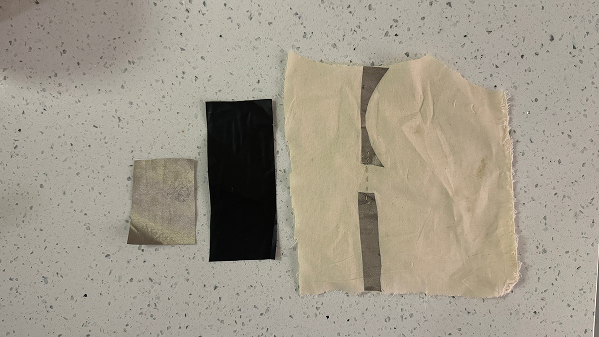
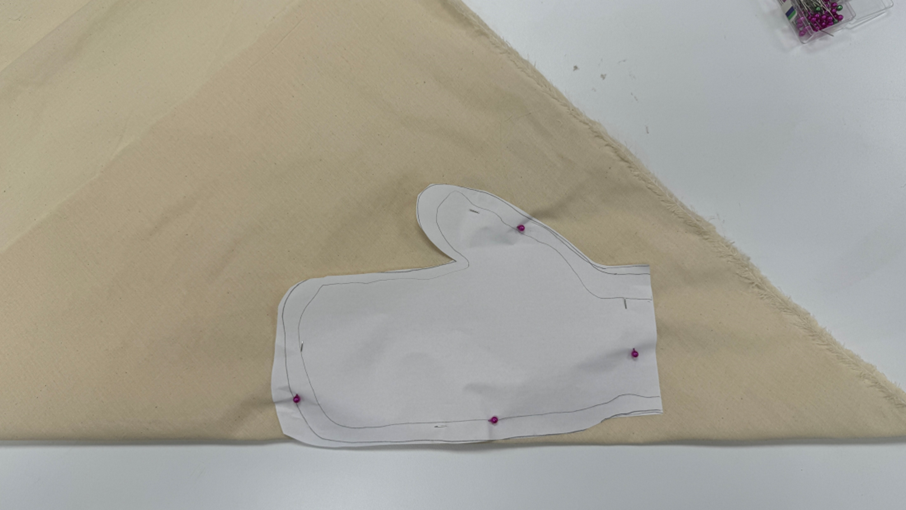
To create the glove pattern, I traced my left hand on A4 paper and flipped it to fit the right hand as well. I added extra space for seams and wiring, then cut the pattern on muslin fabric, placing it diagonally to use the fabric’s natural stretch for a better fit.

Feasibility Test
Using conductive thread to extend the circuit across the glove surface
Concept Sketch
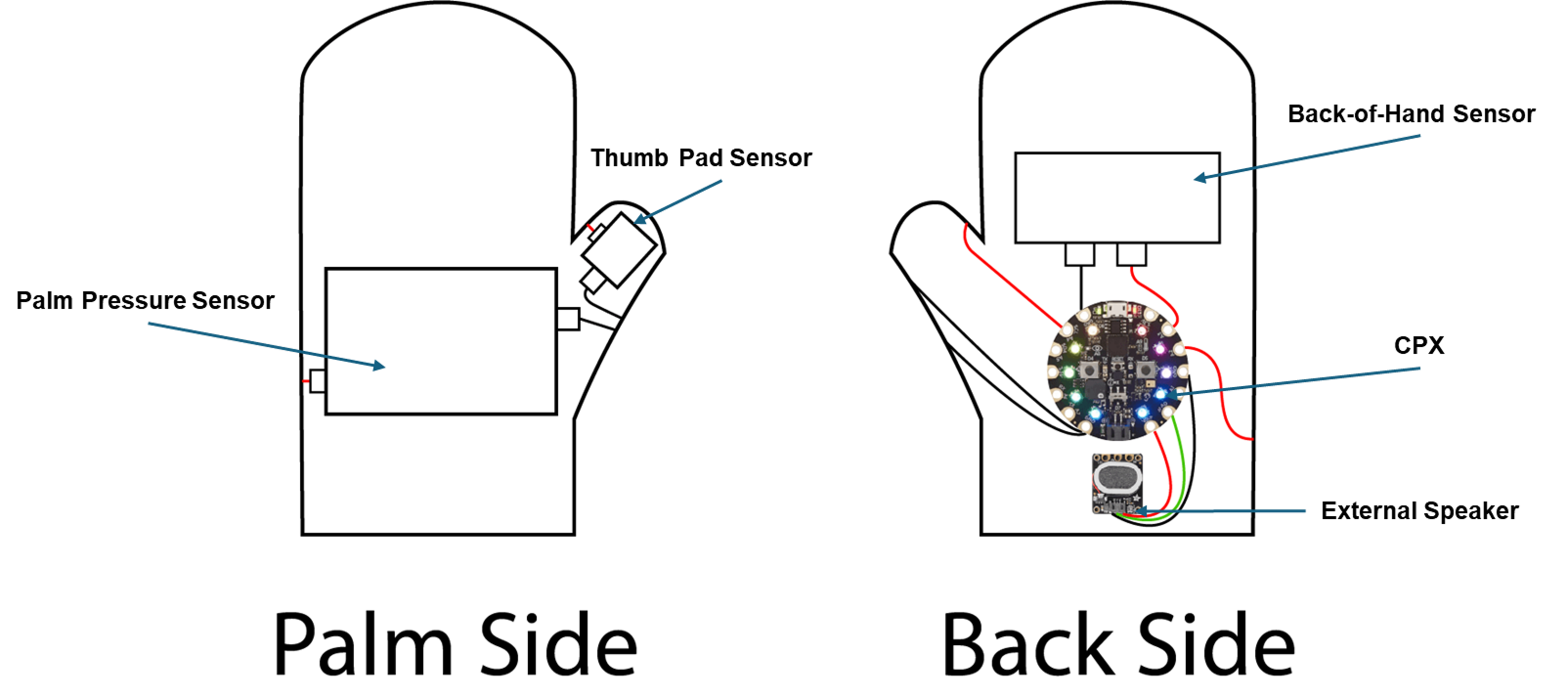
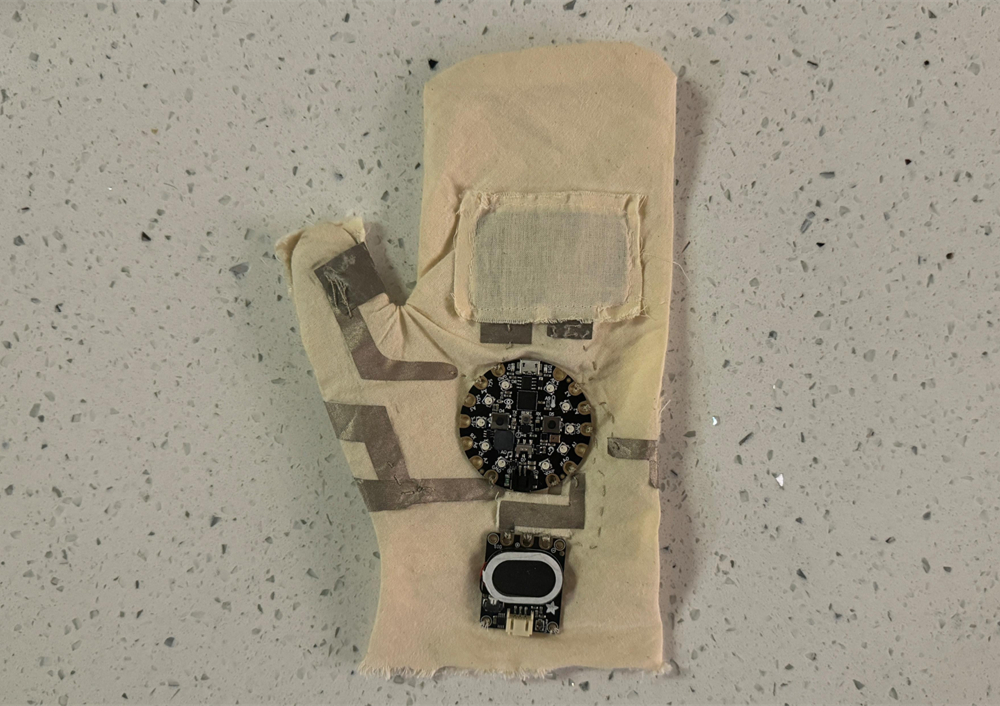
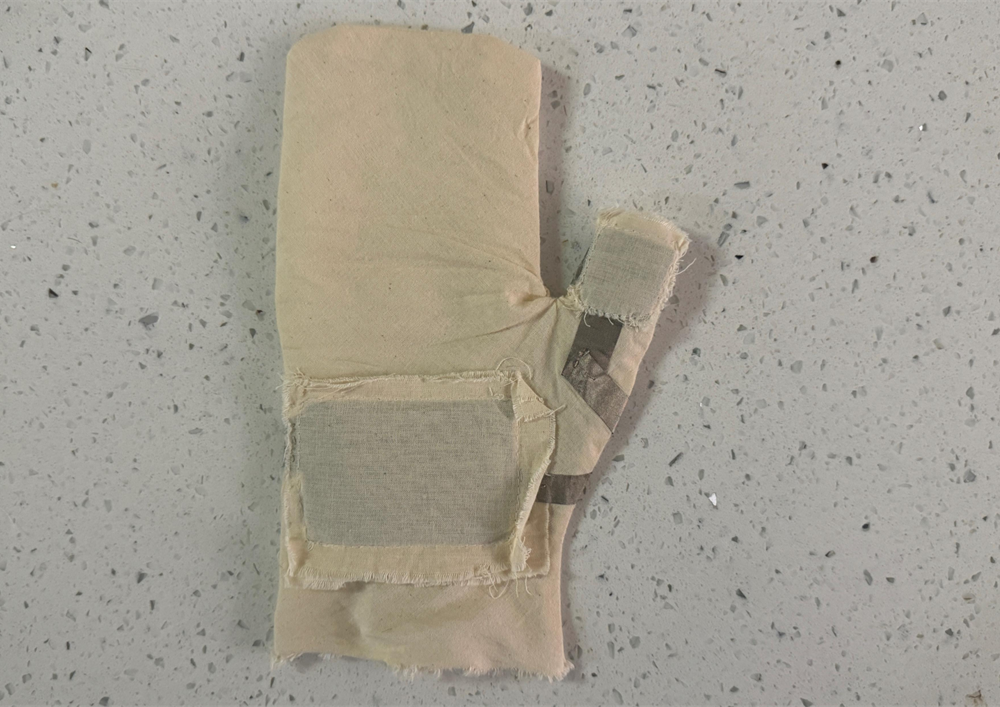
Soft pressure sensors are embedded in the palm, thumb, and back of the hand to recognize gestures such as a pat, thumbs-up, and fist bump.
Using conductive thread, conductive fabric, and machine sewing, circuits are seamlessly integrated into these touch points and amplifying simple gestures to say:
“Hey! I’m with you. Good job!”
Materials
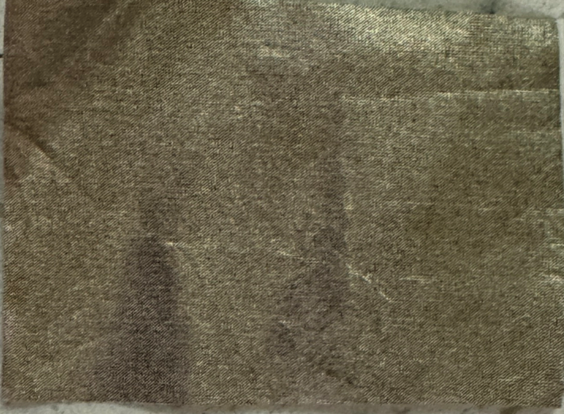
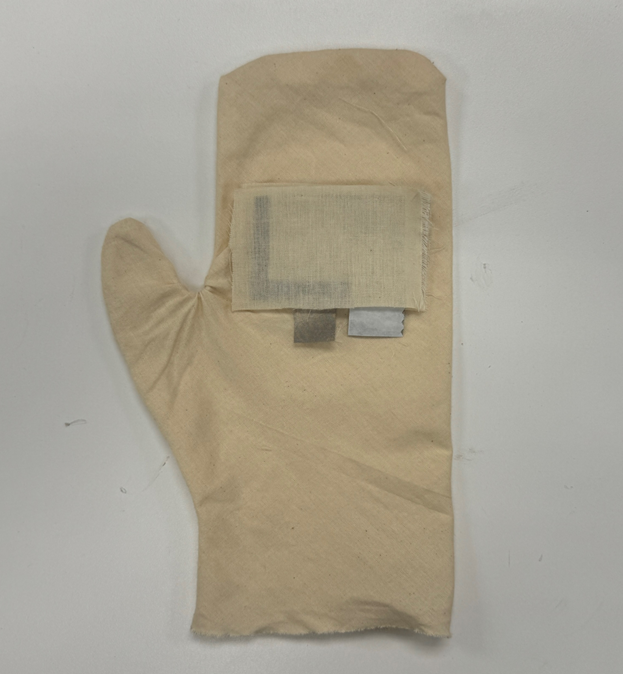
I used an iron to bond the conductive fabric to the base fabric. Then, I layered the materials like a sandwich, using Velostat as the middle layer to complete the pressure sensor.
Construction Process
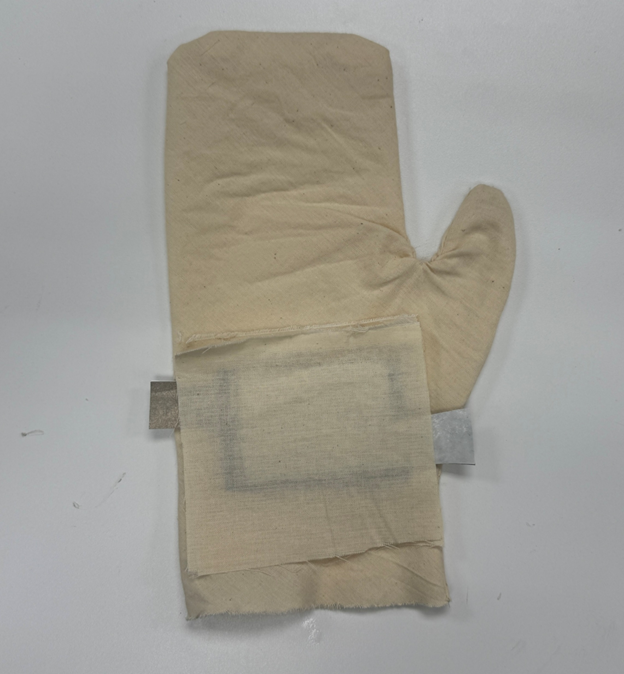
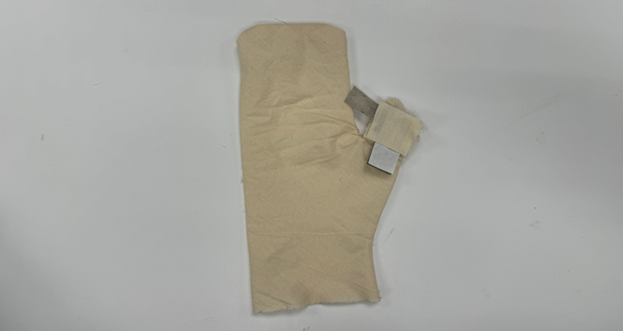
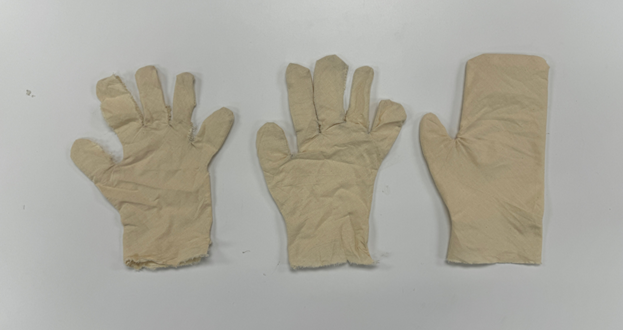
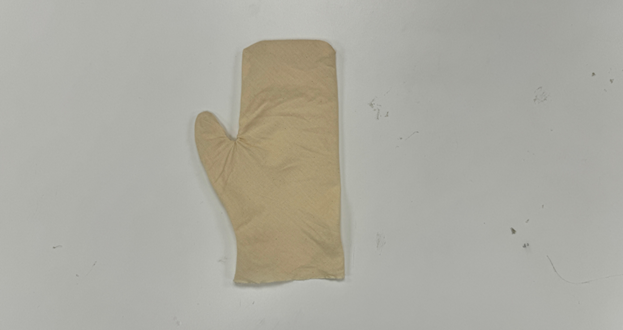
I iterated through three prototypes. The first two were too small, so I rebuild the pattern and scaled it up. After assembling the final glove, I stitched the pressure sensor that built separately onto the palm and routed the circuit using conductive thread.
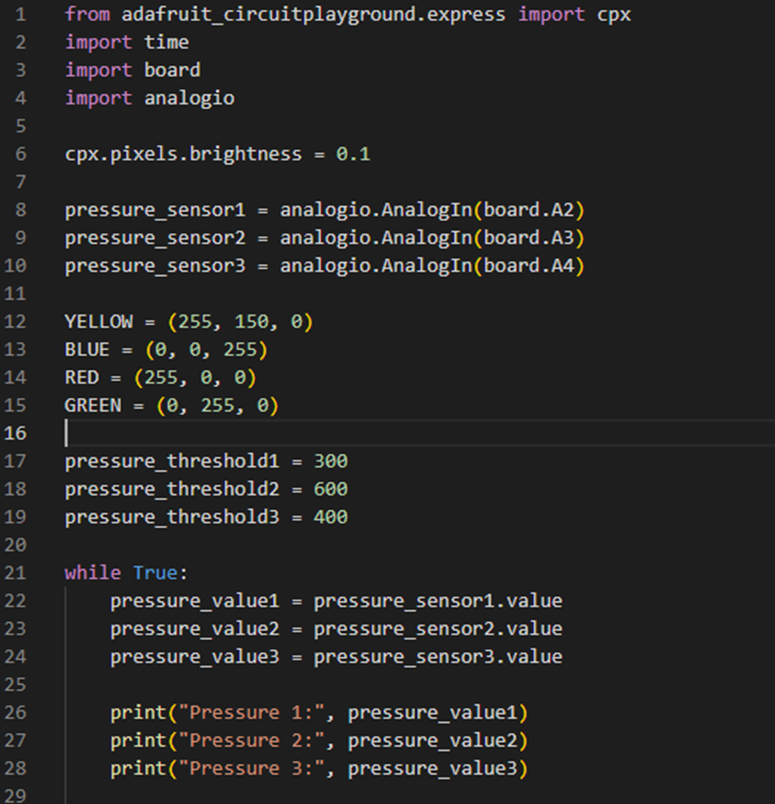
Code & Testing
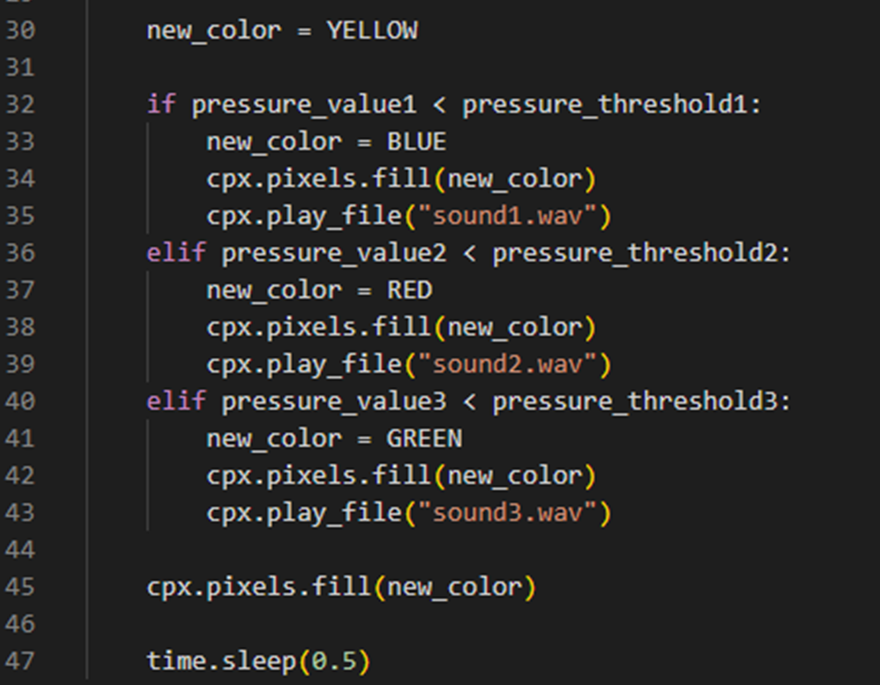
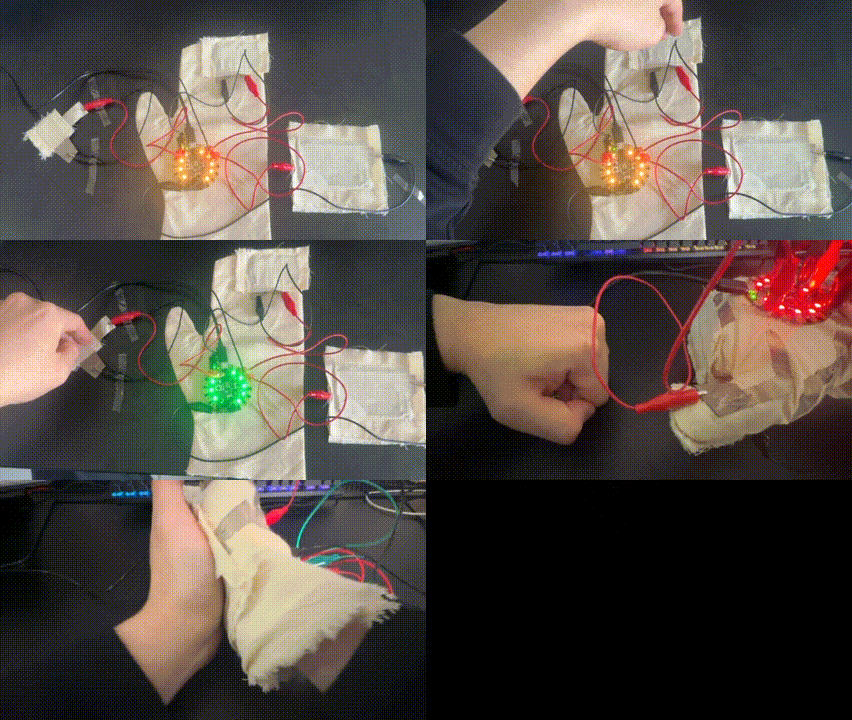
I first verified the logic on the table using alligator clips. The pressure sensor and inputs were connected directly to the microcontroller to ensure the code responded correctly before I proceeded to mount the components onto the glove.
Final Wearable
Challenges & Reflection
Throughout the build, I faced several technical and design challenges:
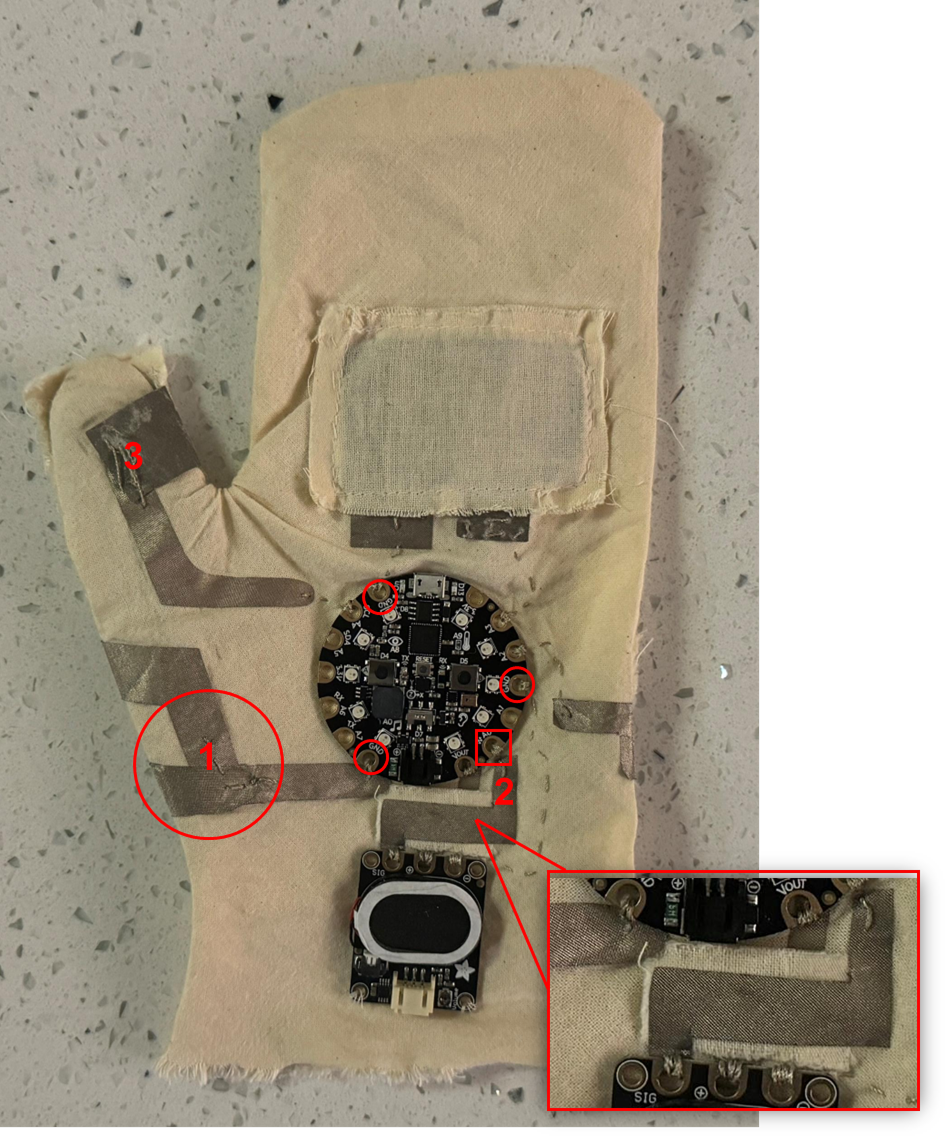
Limited GND Ports:
The Circuit Playground Express only provides three GND ports, but I needed four. I solved this by sharing one GND between two components.
Speaker Pin & Layout:
The speaker only worked with the A0 analog pin, which caused layout overlap. I used two layers of conductive fabric separated by an insulating layer to prevent short circuits.
Connection Stability:
Small issues like uneven stitching caused glitches in the thumb sensor. Strengthening the wiring improved performance.
Sound Quality:
The speaker required a strong connection to reduce static noise. In the final demo, I added extra wiring for clearer audio.
Sensor Calibration:
Wearing the glove changed pressure readings, so I adjusted the code to recalibrate sensor thresholds.
Fit & Comfort:
It took four tries to get the glove size right. Simplifying the finger design made it more flexible and wearable.
Overall, the process taught me the importance of testing, iteration, and material understanding in wearable tech.